
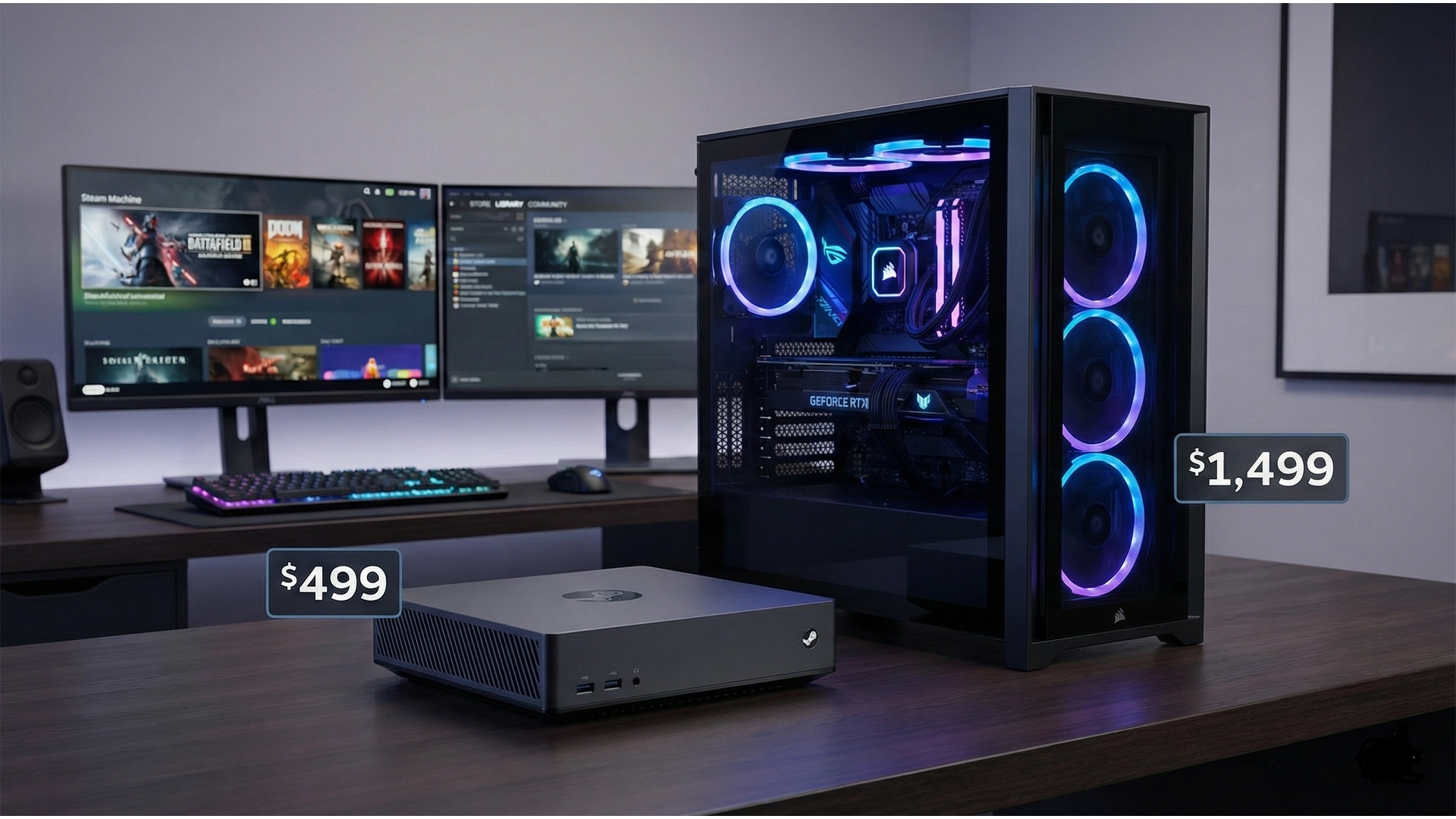
Valve's Pricing Strategy: PC Market Alignment and Industry Impact
In a significant and industry-shaping announcement, Valve Corporation has officially confirmed that the highly anticipated Steam Machine will be strategically priced in alignment with the current PC hardware market, rather than following the heavily subsidized pricing model traditionally employed by console manufacturers like Sony and Microsoft. This revolutionary pricing strategy represents a fundamental paradigm shift in how gaming hardware is positioned, marketed, and perceived within the competitive gaming technology landscape.
According to Valve software engineer Pierre-Loup Griffais, who provided crucial insights into the company's pricing philosophy, "If you build a PC from parts and get to basically the same level of performance, that's the general price window that we aim to be at." This transparent statement definitively clarifies that Steam Machine pricing will be directly competitive with custom PC builds constructed from individual components, offering consumers a "good deal" through efficient manufacturing and bulk purchasing advantages, but explicitly avoiding the heavily subsidized pricing model that console manufacturers utilize to recoup costs through software licensing and subscription services.
"I think that if you build a PC from parts and get to basically the same level of performance, that's the general price window that we aim to be at."
— Pierre-Loup Griffais, Valve
This pricing approach means that Steam Machine will likely cost more than traditional consoles like PlayStation or Xbox, but potentially less than a fully custom-built PC when factoring in assembly, warranty, and support. For PC builders, this creates an interesting comparison point for evaluating the value proposition of pre-built systems versus custom builds.
Expected Pricing & Hardware Specifications: Detailed Analysis
While Valve Corporation has not yet announced exact pricing details or official hardware specifications, we can provide informed estimates for Steam Machine costs based on comprehensive analysis of current PC component pricing trends, market conditions, and Valve's explicitly stated pricing philosophy. The Steam Machine system will likely be available in multiple performance-tiered configurations, similar to how experienced PC builders strategically choose components based on their specific performance requirements, gaming preferences, resolution targets, and budget constraints.
Pricing Expectations
Based on current PC component prices and Valve's pricing strategy, we expect Steam Machine to start around $800-1000 for entry-level configurations, with mid-range systems priced between $1200-1500, and high-end configurations reaching $2000+. These prices align with building a comparable custom PC, with Valve potentially offering slight discounts due to bulk component purchasing.
Expected Steam Machine Configurations
| Product | Feature |
|---|---|
| Entry-Level Configuration | Target Performance: 1080p/60fps gaming |
| Mid-Range Configuration | Target Performance: 1440p/60fps gaming |
| High-End Configuration | Target Performance: 4K/60fps gaming |
| Custom Build Comparison | Best For: Custom builds suit enthusiasts |
Steam Machine vs Custom PC Build: Which Should You Choose?
The anticipated pricing parity between Steam Machine and custom PC builds means the decision-making process extends far beyond simple cost comparisons, requiring careful evaluation of multiple factors including convenience, customization options, upgrade flexibility, warranty coverage, technical support, and personal preferences. Here's a comprehensive breakdown of the key considerations that should influence your decision:
Choose Steam Machine If:
You want a pre-built system with warranty and support, prefer convenience over customization, want a console-like experience with PC gaming capabilities, or don't have the time or interest in building your own PC. Steam Machine offers the best of both worlds: PC gaming flexibility with console-like simplicity.
Choose Custom PC Build If:
You want full control over component selection, plan to upgrade individual components over time, enjoy the building process, or have specific hardware requirements. Custom builds offer maximum flexibility and the ability to optimize for specific use cases or future upgrades.
For PC builders and hardware enthusiasts, the Steam Machine pricing strategy validates the value proposition of custom builds. If Valve can offer competitive pricing with pre-built systems, it suggests that building your own PC remains a cost-effective option, especially when you factor in the ability to choose specific components and upgrade paths.
Performance & Bottleneck Considerations: Comprehensive Analysis
When evaluating Steam Machine against custom PC builds, it's critically important to consider potential performance bottlenecks, system optimization opportunities, and hardware compatibility factors. Pre-built systems like Steam Machine are typically engineered to be well-balanced and avoid common bottleneck scenarios, but experienced custom builders have the distinct advantage of optimizing their systems for specific use cases, gaming preferences, and future upgrade paths.
Our comprehensive bottleneck analysis suggests that Steam Machine configurations will likely be meticulously balanced to prevent CPU-GPU mismatches and ensure optimal performance across various gaming scenarios. However, custom builders can fine-tune their systems to eliminate bottlenecks specific to their individual gaming preferences, whether that involves prioritizing CPU performance for strategy games and simulation titles, maximizing GPU power for AAA gaming experiences, or optimizing for specific resolution and frame rate targets.
"The pricing strategy confirms that building your own PC remains competitive, and custom builders can still achieve better value through careful component selection and optimization."
— PC Hardware Analysis Team
Detailed Hardware Analysis: Component-by-Component Breakdown
Understanding the expected hardware specifications helps PC builders make informed comparisons. Let's examine what each Steam Machine configuration tier likely includes:
Entry-Level Configuration ($800-1000)
Entry-level Steam Machine systems are designed to deliver solid 1080p gaming performance at 60fps for most modern titles. These configurations likely feature mid-range processors such as Intel Core i5-12400 or AMD Ryzen 5 5600, paired with entry-level gaming GPUs like NVIDIA RTX 4060 or AMD RX 6600 XT. With 16GB of DDR4 or DDR5 RAM and a 512GB-1TB SSD, these systems offer excellent value for budget-conscious gamers who want PC gaming flexibility without console limitations.
The entry-level tier is perfect for gamers transitioning from consoles who want to experience PC gaming's advantages, including mod support, broader game library access, and the ability to use the system for productivity tasks. However, these systems may struggle with ray tracing enabled or at resolutions above 1080p, making them less suitable for users targeting 1440p or 4K gaming experiences.
Mid-Range Configuration ($1200-1500)
Mid-range Steam Machine configurations represent the sweet spot for most PC gamers, offering excellent 1440p gaming performance with high frame rates. These systems likely feature high-performance processors such as Intel Core i7-13700K or AMD Ryzen 7 7700X, combined with mid-to-high-end GPUs like NVIDIA RTX 4070 or AMD RX 7800 XT. With 16-32GB of DDR5 RAM and 1-2TB NVMe SSD storage, these configurations provide smooth gaming experiences across virtually all modern titles.
This tier is ideal for serious gamers who want high refresh rate gaming at 1440p, content creators who need a capable system for streaming or video editing, and users who want a system that will remain relevant for several years. The mid-range configuration offers the best balance of performance and value, making it the most popular choice for PC gaming enthusiasts.
High-End Configuration ($1800-2500)
High-end Steam Machine systems are designed for enthusiasts who demand the best possible gaming performance, targeting 4K resolution gaming at 60fps or higher, with ray tracing enabled. These configurations likely feature top-tier processors such as Intel Core i9-13900K or AMD Ryzen 9 7900X, paired with flagship GPUs like NVIDIA RTX 4080 or AMD RX 7900 XTX. With 32GB of high-speed DDR5 RAM and 2TB+ Gen4 NVMe SSD storage, these systems represent the pinnacle of gaming performance.
High-end configurations are perfect for gamers who want to experience the latest games at maximum settings, users with high-resolution displays (4K monitors or ultrawide displays), content creators working with demanding applications, and enthusiasts who want a system that will remain cutting-edge for years to come. However, the price premium may not be justified for users who primarily play less demanding games or don't require 4K performance.
Cost Breakdown: Building vs Buying Steam Machine
To help you make an informed decision, let's break down the costs of building a comparable custom PC versus purchasing a Steam Machine:
Mid-Range Configuration Cost Analysis ($1200-1500)
| Product | Feature |
|---|---|
| Custom Build Components | Total: $1,340-1,820 |
| Steam Machine Value | Value Add: $200-400 |
| Cost Considerations | Best Value: Depends on priorities |
| Long-Term Costs | Total Cost: Comparable over time |
The cost analysis reveals that building a custom PC and purchasing a Steam Machine are remarkably similar in total cost when factoring in warranty, support, and assembly time. The decision ultimately comes down to whether you value the convenience and support of a pre-built system or the customization and control of a custom build.
Gaming Performance Expectations: Resolution and Frame Rate Analysis
Understanding expected gaming performance helps set realistic expectations for Steam Machine configurations:
1080p Gaming Performance (Entry-Level)
Entry-level Steam Machine configurations ($800-1000) should deliver consistent 60fps performance at 1080p resolution in most modern games with high settings. Competitive esports titles like Valorant, CS2, and Rocket League will easily exceed 144fps, making these systems suitable for high refresh rate 1080p monitors. However, the most demanding AAA titles with ray tracing enabled may require medium settings to maintain 60fps, and 1440p gaming will be limited to less demanding titles or lower settings.
1440p Gaming Performance (Mid-Range)
Mid-range Steam Machine systems ($1200-1500) excel at 1440p gaming, delivering 60-100fps in most AAA titles with high to ultra settings. These configurations are perfect for 1440p 144Hz monitors, providing smooth, high refresh rate gaming experiences. Ray tracing performance will vary by title, with some games running smoothly with RT enabled, while others may require RT settings adjustments. 4K gaming is possible but will typically require medium to high settings rather than ultra settings.
4K Gaming Performance (High-End)
High-end Steam Machine configurations ($1800-2500) are designed for 4K gaming, delivering 60fps+ in most titles with high to ultra settings. These systems can handle ray tracing at 4K, though some titles may require DLSS or FSR upscaling to maintain smooth frame rates. For 4K 120Hz displays, these systems can achieve 80-120fps in many titles, though the most demanding games may require settings adjustments. These configurations represent the pinnacle of gaming performance available in pre-built systems.
Upgrade Path Analysis: Future-Proofing Considerations
One critical consideration when choosing between Steam Machine and custom builds is upgrade flexibility:
Steam Machine Upgrade Limitations
While Steam Machine uses standard PC components, upgradeability may be limited by several factors. The system's form factor and case design may restrict the size of components you can install, particularly for GPU upgrades. Some Steam Machine configurations may use proprietary components or layouts that complicate upgrades. Additionally, warranty considerations may discourage user modifications, potentially voiding coverage if you upgrade components yourself.
Custom Build Upgrade Advantages
Custom PC builds offer maximum upgrade flexibility, as builders can choose cases and motherboards specifically designed for future expansion. You can select components with upgrade paths in mind, such as choosing a motherboard with multiple PCIe slots, extra RAM slots, and support for future CPU generations. Custom builders can also optimize their initial build for specific upgrade scenarios, such as starting with a mid-range GPU with plans to upgrade to a high-end model later.
Strategic Upgrade Planning
For Steam Machine owners, strategic upgrade planning involves understanding the system's limitations and identifying which components can be safely upgraded. GPU upgrades are typically the most impactful and straightforward, while CPU upgrades may require motherboard compatibility checks. RAM upgrades are usually straightforward, and storage upgrades are almost always possible. However, the ease of upgrades depends on the specific Steam Machine model and its design.
"The upgrade path is a crucial consideration. While Steam Machine offers convenience, custom builds provide superior upgrade flexibility for users who plan to enhance their systems over time."
— PC Hardware Upgrade Strategy
Market Impact: How Steam Machine Affects PC Component Pricing
Valve's entry into the pre-built PC market with Steam Machine could have interesting implications for component pricing and availability:
Potential Market Effects
If Steam Machine achieves significant market success, Valve's bulk component purchasing could influence component pricing. Large-scale orders might help stabilize GPU and CPU prices during supply shortages, though this could also potentially reduce component availability for individual builders during high-demand periods. However, Valve's commitment to PC market pricing suggests they won't engage in practices that significantly disrupt the component market. The company's transparent pricing approach indicates they aim to coexist with, rather than dominate, the custom PC building ecosystem.
Competition with Other Pre-built Manufacturers
Steam Machine will compete with established pre-built PC manufacturers like Alienware, Corsair, NZXT, and others. This competition could drive innovation in pre-built systems, potentially leading to better value propositions, improved designs, and enhanced customer support across the industry. PC builders benefit from increased competition, as it often results in better products and pricing. The competition may also lead to more transparent pricing across the pre-built market, helping consumers make better-informed decisions.
Impact on Custom Building
The Steam Machine pricing strategy validates the custom PC building market, confirming that building your own PC remains a cost-effective option. This could encourage more people to consider custom building, potentially increasing demand for components and supporting the DIY PC building community. The transparency in pricing also helps educate consumers about PC component costs and value, potentially making custom building more accessible to newcomers who previously found component pricing confusing or intimidating.
SteamOS vs Windows: Operating System Considerations
Steam Machine runs SteamOS, which is Linux-based, creating important considerations for users accustomed to Windows:
SteamOS Advantages
SteamOS is optimized specifically for gaming, with minimal background processes and resource overhead compared to Windows. The operating system is free, eliminating OS licensing costs. SteamOS also benefits from Proton compatibility layer, which allows many Windows games to run on Linux with minimal performance overhead. The system boots directly into Steam's Big Picture mode, providing a console-like experience while maintaining PC gaming flexibility.
SteamOS Limitations
Not all Windows games are compatible with SteamOS, though compatibility continues to improve. Some games with anti-cheat software may not work, and Windows-exclusive applications won't run natively. However, since Steam Machine uses standard PC hardware, users could potentially install Windows if needed, though this may void warranty and requires purchasing a Windows license.
Windows Installation Option
Since Steam Machine uses standard PC components, technically advanced users could install Windows, though this requires purchasing a Windows license (approximately $100-140) and may void Valve's warranty. Installing Windows would provide full compatibility with all Windows games and applications, but would eliminate the console-like simplicity that SteamOS provides. This option is best for users who need Windows-specific software or want maximum game compatibility.
"SteamOS offers a streamlined gaming experience, but Windows provides maximum compatibility. The choice depends on your specific needs and technical comfort level."
— Operating System Selection Guide
Value Proposition Analysis: Is Steam Machine Worth It?
Determining whether Steam Machine offers good value requires considering multiple factors beyond just component costs:
Value Factors Comparison
| Product | Feature |
|---|---|
| Initial Cost | Note: Custom builds may save $50-200 |
| Warranty & Support | Note: Single point of contact |
| Assembly Time | Note: Time is valuable |
| Customization | Note: Component selection |
The value proposition depends heavily on your priorities. If you value convenience, warranty, and support, Steam Machine offers excellent value. If you prioritize customization, component selection, and the building experience, custom builds provide better value. For most users, both options offer similar total cost of ownership over the system's lifespan, making the decision primarily about preferences rather than cost.
Gaming Library Compatibility: What Games Will Work?
Understanding game compatibility is crucial when considering Steam Machine:
Native Linux Games
Games with native Linux support work perfectly on SteamOS, often with performance equal to or better than Windows versions. Popular titles with Linux support include many indie games, Valve's own titles (Half-Life, Portal, Counter-Strike), and an increasing number of AAA games. Check Steam's Linux compatibility filter to see which games in your library support Linux natively.
Proton Compatibility Layer
Proton, Valve's compatibility layer, allows many Windows games to run on Linux/SteamOS. Compatibility varies by game, with some running perfectly, others requiring tweaks, and some not working at all. Check ProtonDB (protondb.com) for community-reported compatibility ratings. Generally, older games and single-player titles have better compatibility than newer multiplayer games with anti-cheat software.
Anti-Cheat Compatibility
Games using certain anti-cheat systems (like EasyAntiCheat, BattlEye) may not work on SteamOS, though compatibility is improving. Popular multiplayer games like Apex Legends, Fortnite, and some Call of Duty titles may have limited or no Linux support. If multiplayer gaming with specific titles is important, verify compatibility before purchasing Steam Machine, or plan to install Windows if needed.
Compatibility Check Recommendations
Before committing to Steam Machine, review your game library on ProtonDB to estimate compatibility. Generally, 70-80% of Steam games work on Linux/SteamOS, with compatibility improving over time. However, if you primarily play Windows-exclusive titles or games with strict anti-cheat requirements, Steam Machine may not be the best choice unless you're willing to install Windows.
Frequently Asked Questions
How much will the Steam Machine cost?
While Valve hasn't announced exact pricing, based on their statement that Steam Machine will be priced similarly to building a PC with equivalent performance, we expect entry-level configurations to start around $800-1000, mid-range systems between $1200-1500, and high-end configurations reaching $1800-2500. These prices align with current PC component costs, with Valve potentially offering slight discounts due to bulk purchasing.
Is Steam Machine cheaper than building a custom PC?
Steam Machine pricing is expected to be competitive with custom PC builds, meaning similar costs for equivalent performance. While Steam Machine may offer slight savings due to bulk component purchasing, custom builders can often achieve better value through careful component selection, sales, and the ability to reuse existing parts. The main advantage of Steam Machine is convenience, warranty, and support rather than cost savings.
Can I upgrade components in Steam Machine?
While specific upgrade policies haven't been confirmed, Steam Machine is expected to use standard PC components, which should allow for component upgrades similar to custom-built PCs. However, upgradeability may be limited by the system's form factor and case design. Custom PC builds typically offer more flexibility for upgrades, as builders can choose cases and motherboards specifically designed for future expansion.
Will Steam Machine be more expensive than gaming consoles?
Yes, Steam Machine will likely be more expensive than traditional gaming consoles like PlayStation or Xbox, which are heavily subsidized. Valve has confirmed that Steam Machine will be priced like a PC, not subsidized like consoles. However, Steam Machine offers PC gaming flexibility, access to the Steam library, and the ability to run PC applications, which consoles cannot provide.
What performance can I expect from Steam Machine?
Performance will vary by configuration. Entry-level Steam Machine systems are expected to deliver 1080p/60fps gaming, mid-range configurations should handle 1440p/60fps, and high-end systems will target 4K/60fps gaming. These performance targets align with similarly priced custom PC builds, as Steam Machine uses standard PC hardware components.
Should I buy Steam Machine or build a custom PC?
Choose Steam Machine if you want convenience, warranty support, and a pre-built system without the hassle of component selection and assembly. Choose a custom PC build if you want full control over components, enjoy the building process, plan frequent upgrades, or have specific hardware requirements. Both options offer similar pricing, so the decision comes down to your preferences and technical comfort level.
When will Steam Machine be released?
Valve has not announced an official release date for Steam Machine. The pricing information comes from recent developer statements, suggesting the project is in active development. Stay tuned to official Valve announcements and gaming hardware news sources for release date information.
Will Steam Machine run Windows games?
Steam Machine will run SteamOS, which is Linux-based. While SteamOS supports many games through Proton compatibility layer, Windows-exclusive games may have limited compatibility. However, since Steam Machine uses standard PC hardware, users could potentially install Windows if needed, though this may void warranty and support agreements.
Tags

Hardware enthusiast and PC build advisor. Alex tests CPUs, GPUs, and memory to help gamers and creators make smarter upgrade decisions.
Follow on Reddit