New DDR5 memory overclocking world record at 13530 MTs
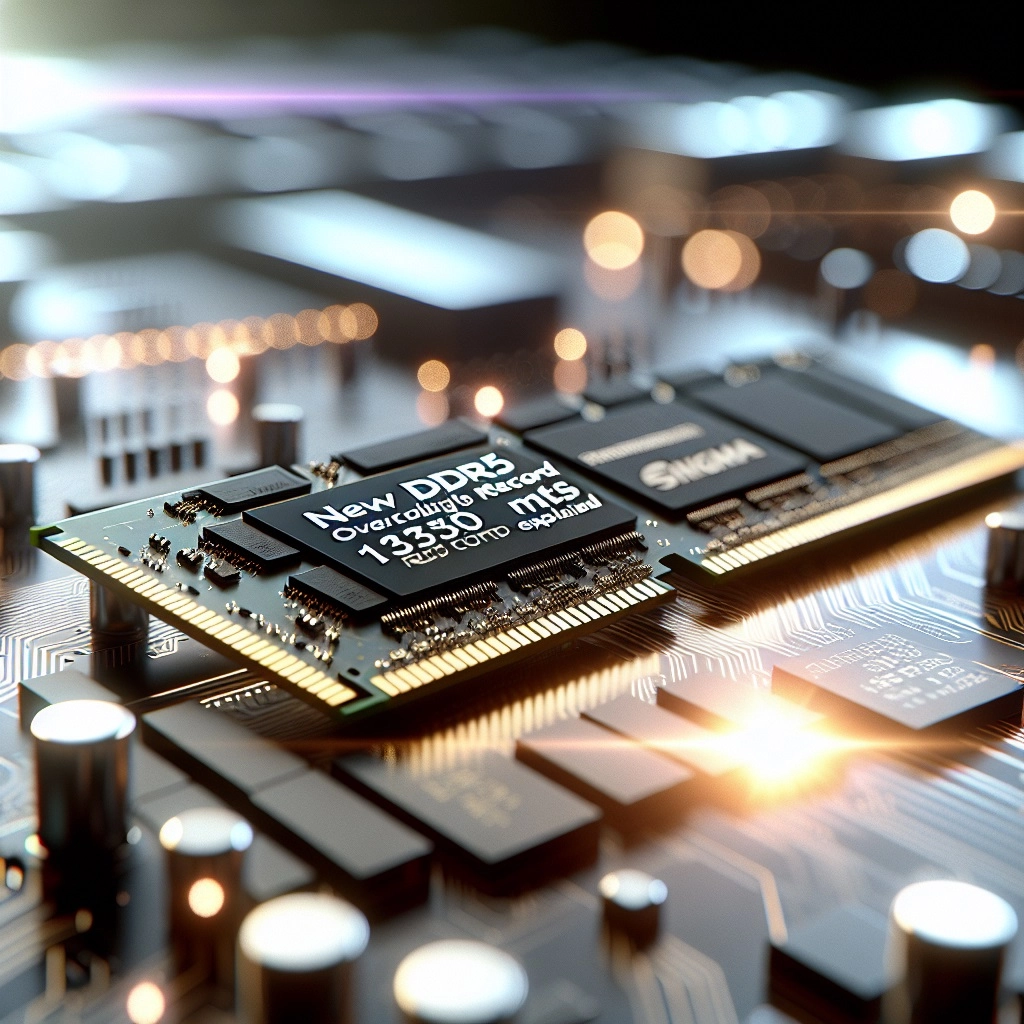
New DDR5 Memory Overclocking World Record Set at 13530 MT/s marks a huge milestone in PC hardware. Enthusiasts keep pushing memory speeds higher, and this record shows how far DDR5 has come. In this article, we explore what 13530 MT/s really means, how overclockers achieved it, and why it matters for gamers, creators, and future platforms.
The New DDR5 World Record: 13530 MT/s Explained
The latest DDR5 overclocking record reaches an astonishing 13530 MT/s (mega transfers per second). This number describes how many data transfers the memory handles each second. Higher MT/s means more bandwidth and, when tuned well, lower latency.
Current mainstream DDR5 kits usually run between 5200 MT/s and 8000 MT/s. Some premium kits hit 8400 MT/s or a bit more. Jumping to 13530 MT/s shows a massive gap between normal usage and world record tuning. It proves modern controllers and ICs still have huge headroom.
Overclockers usually achieve such records with a single memory module. They use a top-end motherboard and a powerful CPU with a strong memory controller. This record relies on very loose timings, high voltage, and extreme cooling. The main goal is maximum frequency, not everyday stability.
Every record depends on three key pieces:
- Memory ICs – High quality DDR5 chips that handle extreme voltage and frequency.
- Motherboard design – Clean power delivery and a strong memory topology.
- CPU IMC – The integrated memory controller that must scale with speed.
Modern enthusiast boards from ASUS, GIGABYTE, MSI, and ASRock focus heavily on memory overclocking. They offer reinforced DIMM slots, tuned traces, and detailed BIOS options. These features allow overclockers to fine-tune voltages and timings to break limits.
The new record confirms that DDR5 technology still evolves fast. What seems extreme today can shape tomorrow’s standard kits. We saw this with DDR3 and DDR4. Old records became reference points for mainstream profiles years later.
How Overclockers Reached 13530 MT/s
The journey to 13530 MT/s involves careful preparation and deep technical knowledge. Overclockers do not simply raise one number in the BIOS. They spend hours, sometimes days, dialing in tiny changes.
First, they bin memory modules. Binning means testing many kits and keeping only the best samples. Overclockers look for modules based on popular ICs like Hynix A-die or M-die, which scale well with voltage. These ICs often appear in many high-end DDR5 kits, even if brands differ.
Next, they select the right platform. High memory clocks often favor specific CPU generations. For DDR5, Intel platforms traditionally lead raw frequency records, thanks to strong IMCs and flexible gear ratios. AMD excels in balanced latency and real-world performance but sometimes trails in outright MHz.
Extreme records almost always use liquid nitrogen (LN2) cooling. Overclockers cool the CPU and sometimes the memory modules to far below zero degrees Celsius. Lower temperatures improve signal integrity and allow higher stable voltages. Without LN2, such frequencies simply could not hold long enough to validate.
BIOS tuning then becomes the main battlefield:
- They increase VDD and VDDQ for the DRAM.
- They tune VCCSA and related voltages for the memory controller.
- They relax primary timings like tCL, tRCD, tRP, and tRAS.
- They loosen secondary and tertiary timings to improve stability.
For a world record, timings often look very loose compared with retail XMP profiles. That is acceptable. The goal is to boot, run a validation tool like CPU‑Z, and prove the frequency. Real-world workloads take a back seat during such attempts.
Stability testing still matters, but on a different level. Overclockers check if the system can boot and complete basic tasks without crashing. For daily systems, you would run hours of stress tests. For records, a screenshot and verification link are enough. The point is demonstration, not production readiness.
This new record also shows how memory training algorithms improved. Motherboards can now negotiate complex timings automatically at crazy speeds. Early DDR5 platforms struggled even at much lower frequencies. Firmware updates, refined BIOS code, and community feedback all pushed the envelope.
While the exact combination of hardware and brand used for the 13530 MT/s record may change, the pattern stays similar. One golden CPU, one golden stick of DDR5, an elite motherboard, and a lot of patience. Together, they create a snapshot of what the technology can do at its extreme edge.
What This DDR5 Record Means for Gamers and the Future
This 13530 MT/s record sounds extreme and distant from normal builds. Still, it offers real benefits over time. Every world record creates data for engineers and enthusiasts. They learn what voltages work, which ICs scale best, and how far current designs can go.
Manufacturers then use this knowledge to refine mainstream products. Today, 8000 MT/s DDR5 kits already reach gamers and content creators. Just a short time ago, people considered 6000 MT/s high-end. Tomorrow’s standard may sit at 9000 MT/s or more, with tighter timings and lower voltage.
For gamers, memory speed mainly affects minimum FPS and frame-time smoothness. Esports titles and CPU-bound games gain the most. Faster DDR5 can reduce stutters and improve 1% lows, especially at 1080p. However, beyond a certain point, gains start to shrink. Balance matters more than chasing record numbers.
For content creators, memory bandwidth helps in specific tasks. Heavy 3D rendering, large photo sets, and scientific workloads can profit from faster RAM. Yet they usually benefit even more from more capacity and a strong CPU. The DDR5 record still pushes the ecosystem forward, which helps these users indirectly.
Another key area is AI and data processing. Modern AI workloads hunger for memory bandwidth. While GPUs handle most heavy lifting, system memory still plays a role. Server-grade DDR5 and future DDR6 will draw from lessons learned here. The signal integrity tricks used in record runs influence enterprise platforms too.
The record also highlights a growing skill gap in overclocking. Auto overclock features evolved, but manual tuning still matters. Enthusiasts who understand timings and voltages can squeeze more from their hardware. They do not aim for 13530 MT/s, but they can run 7000–8000 MT/s with tight timings and solid stability.
New BIOS profiles and “memory try-it” features appear because of such experiments. Vendors capture successful settings from pro overclockers and share them with the community. This shortens the learning curve and spreads benefits beyond the small extreme crowd.
We should also consider platform design. Each new memory record pressures CPU makers to build stronger IMCs. Intel and AMD both invest heavily in future architectures. Better IMCs mean higher supported speeds even at JEDEC or EXPO/XMP settings. Average users then enjoy faster out-of-the-box performance without tweaking.
Finally, this milestone shapes expectations for DDR6 and later standards. If DDR5 already hits 13530 MT/s under extreme tuning, next-gen memory can aim much higher. The industry now has a clearer vision of what signal paths, PCB layers, and controller logic can handle. The record acts like a lighthouse for upcoming designs.
From an SEO viewpoint, people search phrases like “DDR5 world record,” “13530 MT/s DDR5,” and “fastest DDR5 RAM.” They want to know if such speeds affect their own builds. The answer is simple: not directly yet, but the impact will filter down. The trickle-down effect from extreme lab records to gaming rigs usually takes a few product cycles.
When you plan your next upgrade, remember this event as a reference point. It marks a stage in DDR5 maturity. While you may not need record-breaking RAM, you will benefit from better validated kits, stronger controllers, and smarter firmware. All of these grew from the same spirit that drove overclockers past 13.5 GT/s.
Conclusion
The new DDR5 overclocking world record of 13530 MT/s shows how far modern memory can stretch. It combines elite hardware, expert tuning, and extreme cooling into one headline result. While such speeds stay out of reach for daily rigs, they guide future DDR5 and DDR6 development. Gamers, creators, and AI users will all benefit as these limits slowly transform into reliable, mainstream performance.