Track SEO Results With AI For Real Revenue Growth
Introduction to Tracking SEO Results With AI
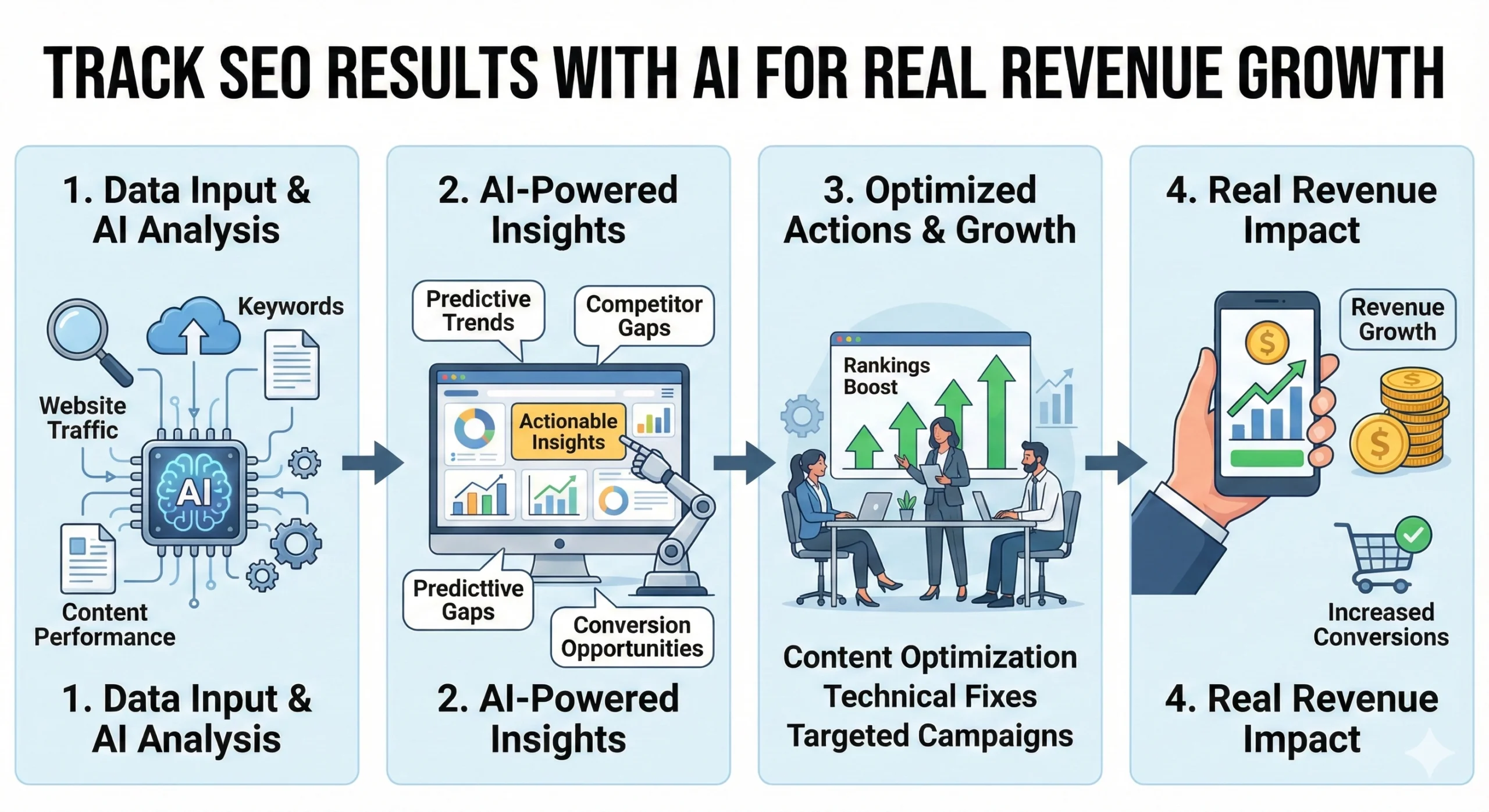
Tracking search performance used to be slow and guess-heavy. Today you can use smart tools to see what actually works. In this guide you will learn how to track SEO results with AI, read the data, and turn insights into traffic, leads, and real revenue.
Why Traditional SEO Reporting Is No Longer Enough
Most local teams still lean on old style reports. Basic rankings, traffic charts, and monthly PDFs. These help a little, but they often hide what really drives wins and losses.
Search shifts quickly. Google updates, changing user intent, and new rivals move the goalposts often. Manual tracking falls behind. You see results weeks after they happen, not when you can react.
On top of that, people use more devices and search in many ways. Voice search, map packs, video results, and featured snippets change how your pages appear. A single rank number misses that full picture.
Smart businesses in our area already use more advanced tools. They mix log file data, search console, analytics, and call tracking. Yet pulling those views together by hand can take hours each week.
This is where AI powered workflows come in. They can join data streams, spot patterns, and flag issues before they hurt your revenue.
What It Really Means To Track SEO Results With AI
Tracking SEO with AI does not mean pressing a magic button. It means teaching software to help with heavy analysis. The human stays in charge of strategy and judgment.
AI systems review huge sets of data in seconds. They spot trends that you or I might miss. For example, they can link drops in search traffic with shifts in user intent or layout changes on your site.
Instead of checking one metric at a time, these tools layer many signals. They review click through rates, dwell time, scroll depth, bounce patterns, and conversions. Then they create clear alerts and suggestions.
Google itself uses machine learning in ranking, as confirmed in public talks by Google Search Central. So using similar styles of pattern analysis in your tracking keeps you closer to how the search engine thinks.
The goal is simple. Use AI to remove guesswork, save time, and focus your energy where results are highest.
Core Metrics You Must Track Before Adding AI
Before you add advanced tools, lock in your basic measurements. Strong tracking starts with a clear baseline. That way any AI layer has clean data to learn from.
At a minimum, you should measure the following items every week.
- Organic traffic by landing page and by device type
- Search queries from Google Search Console for key pages
- Click through rate from search results for top queries
- Conversion events such as calls, forms, chats, and sales
- Local actions such as direction requests and map clicks
- Page speed scores and core web vitals
- Backlink growth and referring domains
Set simple goals for each group. For example, more organic calls from your service pages or higher click rates on your main offer page. Clear goals help any AI system know what matters.
Once these basics run cleanly, you are ready to add more advanced tracking layers.
Types Of AI Tools That Help Track SEO Results
Many vendors offer AI features now, from tiny plugins to large suites. You do not need them all. Focus on tools that solve real problems for your local business.
Here are common types and how they help.
- AI enhanced rank trackers that group keywords by intent, page, and funnel stage
- Traffic analysis platforms that forecast trends and flag unusual changes
- Content intelligence tools that map topics, entities, and search journeys
- Technical SEO monitors that scan for crawl, index, and site health risks
- Attribution tools that link search visits to leads and revenue
Respected platforms such as Semrush, Ahrefs, Moz, and Screaming Frog now use machine learning features for reporting and insights. Web analytics tools like Google Analytics 4 also offer predictive metrics and anomaly alerts.
Pick one or two that match your needs and budget instead of trying everything at once.
Setting Up Clean Data For AI SEO Tracking
AI tools are only as good as the data they read. Dirty or missing data leads to poor insights. So take time now to prepare your tracking setup.
Follow these steps to get your foundation right.
- Connect Google Analytics 4 with Google Search Console
- Set up proper conversion tracking for forms, calls, and sales
- Use UTM tags for campaigns so channels are clear
- Link your Google Business Profile for local actions
- Ensure all key pages use consistent tracking scripts
Check that your time zone, currency, and domains are all set correctly. Misaligned setups can twist your reports and confuse AI systems.
Once the basics are in good shape, connect your main SEO and analytics tools. Most leading platforms have one click or guided connections that feed centralized dashboards.
Using AI To Monitor Keyword Rankings With Context
Rankings still matter, but only with context. Old reports showed a simple list of positions. They did not explain why a move happened or how it affects revenue.
Modern AI rank trackers group terms by intent and stage. You may see clusters such as research queries, comparison queries, and high intent queries. Each cluster links to specific pages.
Instead of staring at one term, you view the whole topic. You can see if your cluster gains share or loses ground. The software can flag when a rival starts to outrank you for key clusters.
Smart systems also watch new SERP features. They track if your listing appears in featured snippets, people also ask boxes, or map packs. Since these spots get more clicks, the tools weigh them heavily.
This approach gives you a richer view. You are not just chasing a few phrases. You track full search journeys tied to your services.
Analyzing Traffic And Engagement With Predictive Insight
Raw traffic numbers say little alone. You need to know who visits, what they do, and what they might do next. AI driven traffic tools help you see this faster.
Tools such as Google Analytics 4 use predictive models to estimate the chance that a visitor will convert. They look at behavior, device, landing page, and source. Then they flag users with higher intent.
Other platforms can spot odd trends. For example, a sudden drop in mobile visits from a certain city. Or a sharp rise in bounce rate on one landing page. They send alerts so you can fix issues quickly.
Pay special attention to these metrics for each key page.
- Sessions and unique users from organic search
- Engaged sessions and average engagement time
- Scroll depth and event triggers such as button clicks
- Goal completions and revenue attributed to search
By layering prediction and anomaly detection on these metrics, you turn static charts into early warning systems.
Tracking Conversions And Revenue From Organic Search
Rankings and clicks only matter if they drive real results. That could be local leads, online sales, or bookings. AI enhanced attribution tools make this link clearer.
Multi touch models review many interactions. A user might first find you with a blog post. Later they return through a local listing, then convert through direct traffic. Old reporting gave all credit to the last click.
Now you can use data driven attribution, as recommended by Google and Meta. The system weighs each step in the journey. This shows how strong your organic touchpoints truly are.
Specialized call tracking platforms add another layer. They use number pools and speech analysis to link calls and keywords. From there you can see which landing pages and phrases bring the best leads, not just the most calls.
Tie these insights back to revenue. Tag each lead outcome as closed won or lost in your CRM. Many CRMs sync with analytics tools. That lets AI systems see which paths bring paying clients, not just visitors.
Spotting Content Gaps And Opportunities With AI
Content drives most search wins. Yet most sites leave big gaps. AI content intelligence tools help you see where you miss the mark compared to leaders.
These systems read top ranking pages across your niche. They surface related entities, questions, and subtopics. For example, a tool might show that top pages on your subject often cover pricing, timelines, and risks. Your guide might skip those parts.
By mapping topics this way, you can build deeper, more helpful pages. You also discover long tail queries and supporting posts that feed your main pages.
Brands like Clearscope, MarketMuse, and Surfer SEO use this type of analysis. They do not create strategy for you. Instead, they reveal what real users and search algorithms expect to see.
Use these insights to decide which pages to update first. Focus on those already getting impressions. Small upgrades there can bring quick, clear wins you can track.
Improving Local SEO Tracking With AI Signals
If you serve local customers, map results and local packs are vital. Tracking these spots by hand can be slow. AI local tools make this easier and more exact.
Local tools can simulate searches from many nearby areas. They show how often your Google Business Profile appears and for which phrases. They also log your position in the pack and the features shown, such as reviews and photos.
Some systems blend these views with call data, direction requests, and on site visits. This helps you see which neighborhoods respond most. You can use this to tune your local content, ads, and offline outreach.
Reputation tools use natural language processing to study your reviews. They group themes and sentiment. You may find that clients love your service speed but worry about parking. Addressing such issues can lift both ratings and local rankings, as local SEO experts at BrightLocal and Whitespark often note.
Using AI For Technical SEO Monitoring And Alerts
Technical issues can erase months of hard work. A small change in a template might break tracking or hide content. Manual checks miss many of these problems.
AI powered crawlers and health monitors keep watch. They scan your pages often and compare new crawls with past versions. If something looks wrong, they alert you before traffic drops sharply.
Here are issues such tools often catch.
- Sudden spikes in 404 errors or redirect chains
- Index coverage changes in key sections
- Accidental noindex tags on live pages
- Broken schema and rich result markup
- Large drops in page speed or core web vitals
Some platforms rate issues by estimated impact. They look at traffic, links, and conversion data to rank fixes. This helps you prioritize technical work that truly moves results.
Building AI Powered SEO Dashboards For Clear Decisions
Raw exports and scattered reports can overwhelm anyone. To keep your focus, build one main dashboard that combines your key signals. AI layers can then highlight what matters most.
Popular options include Looker Studio, Power BI, and Tableau. Many SEO platforms offer direct connectors. You can pull in rank data, search console, analytics, and revenue numbers into one single view.
Add smart features such as conditional formatting and anomaly detection. For example, highlight any page with a drop in impressions and conversions at the same time. Or flag terms where your click rate falls while rivals gain.
Over time, you can test automated insights. Some tools suggest actions, such as improving title tags or updating old posts. Treat these as ideas, not rules. Your local knowledge should guide final choices.
Common Mistakes To Avoid When Using AI For SEO Tracking
Many people adopt AI tools and then feel lost. A few common mistakes cause most of the trouble. Avoiding them can save you time and money.
- Relying only on AI suggestions without human review
- Chasing vanity metrics like total keywords instead of revenue
- Ignoring data quality problems or missing tracking
- Switching tools often and losing historical data
- Expecting instant results from changes that take weeks
Search experts at groups like Search Engine Land and Moz stress patience. Search engines need time to crawl, index, and test changes. Use AI to track trends gently over weeks, not hours.
Trust your local insight too. You know your customers, seasons, and habits better than any system. Blend that knowledge with data for the best calls.
Turning AI SEO Insights Into A Simple Action Plan
Data without action does not help your business. The final step is turning AI insights into a steady routine. Keep it simple so you and your team stick with it.
Here is a basic flow that works well for many local teams.
- Review core dashboard each week for alerts and trends
- Pick three high impact issues or chances to tackle
- Plan small tests such as new titles or improved sections
- Log each change with date and expected outcome
- Check impact after two to four weeks and adjust
Over months, these steady steps add up. AI helps you pick better bets and avoid blind spots. Your role is to guide strategy, create real value for visitors, and keep the business vision front and center.
Conclusion And Next Steps For Smarter SEO Tracking
Tracking SEO results with AI lets you see more, react faster, and tie work to revenue. Start with clean data and clear goals. Add tools that reveal patterns in rankings, traffic, content, and conversions. Then turn those insights into small, steady improvements. When you blend smart tracking with local insight and helpful content, search becomes a reliable growth engine.