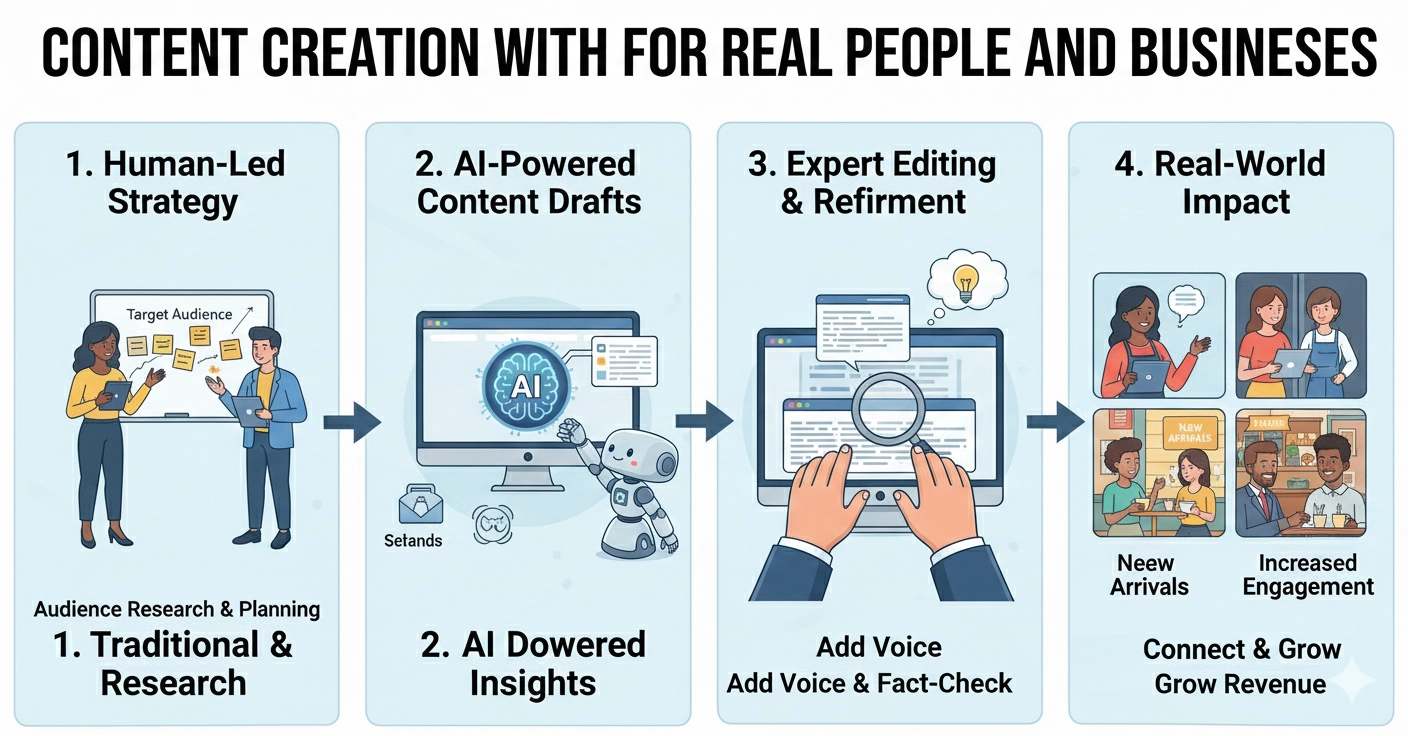
Content creation with AI for real people and businesses
Content Creation With AI For Real People
Content creation with AI is changing how local writers, businesses, and teams work every day. In this guide, you will learn what these tools can really do, where they fall short, and how to blend them with your own voice. You will also see clear steps, examples, and safety tips you can put to work today.
Understanding What AI Content Tools Actually Do
Let us start with what these tools really are. They are pattern tools, not magic brains. They read huge amounts of text and learn how words often link together.
When you type a prompt, the system predicts the next useful word again and again. That is how you get blog posts, emails, scripts, and more.
These tools do not think like a human neighbor, but they imitate patterns. They can help draft, rewrite, summarize, and suggest ideas in seconds.
Research from MIT found that writers using advanced tools finished tasks faster and with higher rated quality for many tasks, especially simple writing and editing. That shows the power of blending human skills with software.
Still, no tool knows your town, your clients, or your story like you do. That is where your local sense, culture, and real experience matter most.
Why Content Creation With AI Matters For Your Business
Many local shops, solo creators, and small agencies struggle with time. There is always one more blog to write or one more email to send.
These tools can cut drafting time so you can focus on work that needs your judgment. You get more space for strategy, calls, and real customer care.
They also help smaller teams compete with larger brands. You can publish on a steady schedule without burning out your staff.
McKinsey research shows automation can save hours each week in marketing tasks. That time can move into planning, client support, or product improvement.
When used with care, these helpers become a force multiplier, not a replacement for people.
Planning A Content Strategy Before You Use Any Tool
Before you open a writing app, you need a clear plan. Tools work best when they follow a strong map, not when they lead the way.
Start with three questions.
- Who are we trying to help
- What problems do they face each day
- What change do we want from each piece
Write short answers in plain language. Think of a neighbor asking for help over coffee. That tone will keep your content grounded.
Next, pick a small set of topics that link to your product or service. Look for long term themes, not random trends.
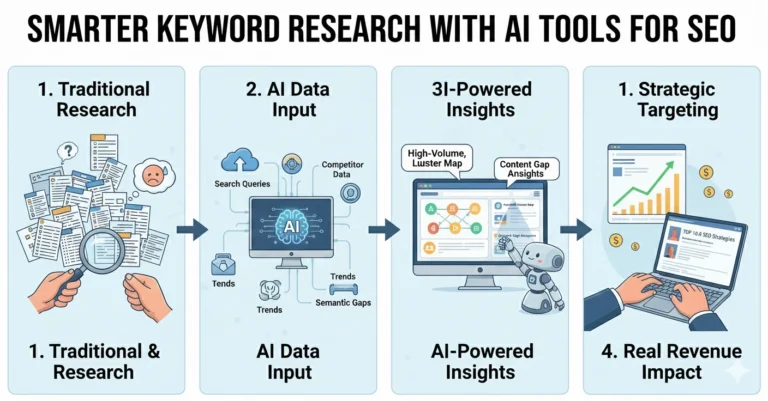
Use tools like Google Search Console, Search Generative Experience, or Ahrefs to see real search terms. Focus on helpful questions, not only high volume keywords.
Then match your topics to formats, such as how to guides, checklists, local stories, and comparison pages. Now your content map is ready for support from software.
Choosing The Right AI Tool For Your Content Goals
Not every tool fits every job. Picking the right one saves time and money.
Think about what you need most.
- Draft help for blogs and email newsletters
- Ideas for social posts, hooks, and headlines
- SEO research for topics and related phrases
- Editing for clarity, tone, and grammar
General writing models work well for rough drafts, outlines, and rewrites. Some tools focus on search optimization and suggest headings, questions, and structured layouts.
Others focus on sales copy, landing pages, and ad text. They help test different angles and calls to action.
Review privacy terms before adding customer details. Leading groups like the Electronic Frontier Foundation remind users to guard private data in cloud tools.
Pick one or two tools to learn deeply instead of chasing every new trend. Mastery beats sheer volume.
Creating Strong Prompts That Get Better Content
Good results start with clear prompts. A vague request gives vague words. A sharp request gives helpful words.
Use these elements in your prompts.
- Role or voice, such as neighborhood bakery owner or school coach
- Audience, such as new parents, first time buyers, or local runners
- Goal, such as teach, compare, persuade, or support
- Format, such as list, guide, script, or FAQ
- Length range, like short intro or in depth breakdown
For example, instead of saying write a blog on home repairs, you can say create a friendly guide for new local homeowners on how to handle small leaks before calling a pro.
Test several versions. Tweak one detail at a time. Soon you will know what style of request brings the best drafts for your voice.
Blending AI Drafts With Your Unique Human Voice
This is where most people go wrong. They copy and paste a full draft and hit publish. That leads to bland text and weak trust.
Your real value is your point of view. Software can lay bricks, but you design the home.
After you get a draft, follow this path.
- Read the piece out loud
- Mark lines that sound stiff or generic
- Add personal stories, local examples, and real names where allowed
- Swap vague phrases for clear, concrete details
- Adjust the tone to match how you talk in person
Share examples from your own clients, with consent and privacy. Describe real outcomes, even small ones.
Readers from your area will feel the difference fast. The content will sound like it came from a real person down the street, not a distant firm.
Using AI For SEO Without Falling Into Keyword Traps
Modern search engines like Google care most about helpful content. Their Helpful Content System and quality rater guidelines focus on people first value.
That means more than stuffing words into a page. It means covering topics in depth, with clear structure and honest insight.
You can ask tools to suggest related topics, subheadings, and common user questions. This helps you build topical depth around your main themes.
Once you get ideas, filter them with your own judgment. Ignore odd or off topic ideas. Keep the ones your readers truly need.
Use related phrases naturally, not on a strict quota. Search engines use semantic understanding, so variety is healthy.
Also, keep your page easy to scan. Use short paragraphs, clear headings, and lists where they help readers move quickly.
Scaling Content Production While Keeping Quality High
As your flow improves, you may want to publish more. The risk is losing quality as volume grows.
Build a simple content operations system.
- Topic list linked to business goals
- Draft step using your favorite writing tool
- Human edit step for tone, facts, and style
- Fact check step with trusted sources
- Final proof and upload
Assign clear owners for each step. Even in a small shop, you can split roles by day or type of piece.
You can also reuse strong content in new formats. Turn one guide into a newsletter, short video script, and social posts, with support from your tools.
This system lets you grow output while keeping a human eye on every piece.
Maintaining Accuracy And Avoiding False Information
All large models can produce false facts. Researchers call this hallucination. It happens when the tool predicts a pattern that looks right but is wrong.
Never trust a claim by default. Check details the same way you would check a new hires work.
Use reliable sources like:
- Government sites, for example CDC or local health departments
- Academic sources such as Google Scholar or university pages
- Respected media with strong editorial standards
- Primary data from your own business systems
When sharing numbers or studies, link back to the main source. This builds trust with readers and with search engines.
The World Health Organization and similar groups warn about online health myths. This shows why careful review matters, especially in sensitive fields.
Respecting Ethics, Privacy, And Legal Rules
Good content is not only polished. It is also ethical and safe for users.
Avoid sharing private details about clients, staff, or neighbors without written consent. Swap names and remove unique markers when you tell stories.
Check copyright rules before using any text, images, or data you did not create. The U.S. Copyright Office and similar bodies in other countries publish clear guides.
When you use software to assist writing, stay honest with your audience and team. Many major publishers, including The Associated Press, share open policies on tool usage.
In regulated fields like health, finance, and law, ask a licensed professional to review every piece. Software cannot give official advice or replace trained experts.
Clear ethics protect your readers and your brand for the long term.
Measuring Results And Improving Your Process Over Time
Publishing is only half the job. You also need to track what works and adjust.
Use a simple scorecard with a few key metrics.
- Organic search visits and click through rates
- Time on page and scroll depth
- Leads, calls, or sales from each content piece
- Replies, comments, and shares from real readers
Google Analytics, Search Console, and tools like Matomo give these insights. Check results at least once a month.
Look for patterns. Which topics draw the most engaged traffic. Which formats win more signups.
Then adjust your future prompts, topics, and calls to action. This cycle makes your system smarter without any extra buzz or drama.
Future Trends In Content Creation With AI
The field keeps moving fast, but some trends are already clear.
Search engines are adding more AI powered overviews and answer panels. That means your content must answer core questions clearly in short sections.
Structured data, like FAQ style content and clear headings, becomes even more important. It helps systems understand and quote your pages.
We will also see more tools built into everyday apps like word processors, email clients, and website builders. This makes support feel natural, not separate.
At the same time, demand for honest, human grounded content will rise. People can sense when writing has no real person behind it.
The best brands will pair efficient tools with real experts, not choose one or the other.
Practical Workflow Example You Can Start Using Today
To make this real, here is a simple weekly plan you can try.
- Choose one key topic that links to your service
- List common questions clients ask about that topic
- Use your tool to draft an outline with headings
- Ask it to expand each heading into short sections
- Edit for local tone, stories, and accurate facts
- Add internal links to related pages on your site
- Publish and share in your newsletter and social feeds
- Review performance metrics after two to four weeks
Repeat this pattern and track how long each step takes. Over time, you will gain a smooth rhythm that fits your schedule.
Conclusion And Final Takeaways
Content creation with AI works best when it supports your own skill, not when it replaces it. Plan your topics with care, craft sharp prompts, and always blend drafts with your voice and local insight. Protect privacy, double check facts, and measure results often. When you stay human at the center, these tools become a steady partner in growing your business.