Smarter keyword research with AI tools for SEO
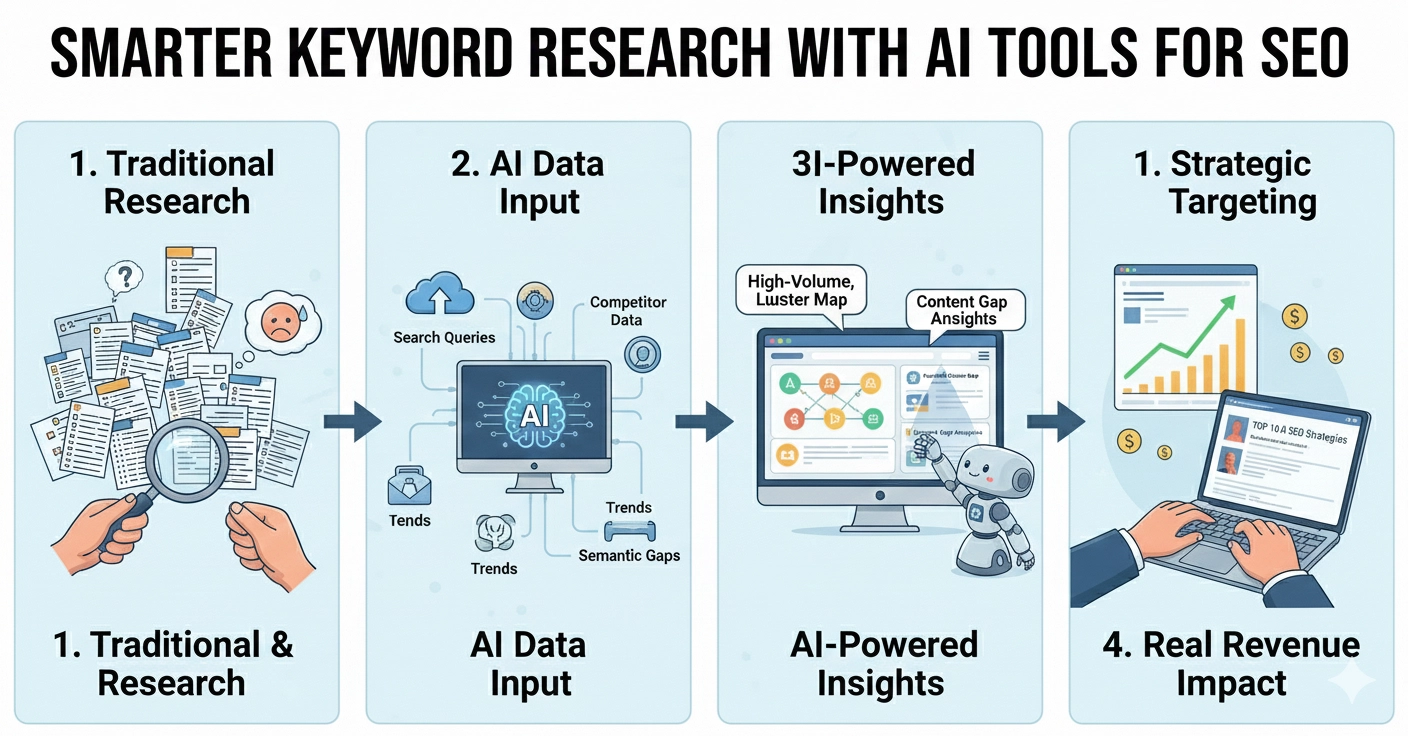
Good keyword research feels like a superpower. Today, smart tools help you find search terms faster and with more insight. In this guide, you will learn how to use modern tools to discover topics, gauge demand, judge difficulty, and map keywords to content that can actually rank and convert.
Understanding Modern Keyword Research Basics
Strong search work still starts with simple questions. Who is your audience, what are they trying to do, and how can you help them? When you know that, every search term becomes part of a larger plan, not a random guess.
Classic metrics still matter. Monthly volume shows demand. Difficulty hints at how hard a term is to rank for. Click through estimates reveal if people actually visit sites or stay on the results page.
Google has changed a lot. Rich results, answer boxes, and search generative features now compete for attention. You must look beyond raw volume and ask what the results page really looks like for each phrase.
Good tools do not replace thinking. They speed up research and reveal patterns. Your job is to connect those patterns with what real people in your region actually need right now.
Clarifying Search Intent Before Using Any Tool
Search intent shapes everything. If you do not align with intent, you will not rank, no matter how clever your process is. First, group searches into broad intent types.
- Informational intent: people want to learn, not buy yet.
- Navigational intent: people want a specific brand or page.
- Transactional intent: people are ready to buy or book.
- Commercial research intent: people compare options before choosing.
Open Google and study the first page for your main ideas. If you see guides and how to pieces, the intent is mostly informational. If you see product listings, reviews, and prices, the intent leans transactional or commercial.
Search features also signal intent. Local packs often show nearby shops and services. Knowledge panels highlight entities and key facts. Shopping carousels show strong buy intent.
Write a one line intent summary for each seed topic. For example, “people want simple steps to start a small garden” or “people want quick quotes for home insurance.” Keep that summary next to you when you expand phrases with tools.
Choosing Reliable Keyword Research and Analytics Tools
You do not need every tool on the market. You need a lean set that works well together. Start with trusted platforms used by search professionals.
Popular options include Google Keyword Planner, Google Trends, and Search Console. They give first party data that reflects real queries on Google. For broader insights, many specialists use Semrush, Ahrefs, Moz, and Similarweb.
Google Search Console is gold for confirmed query data. It shows impressions, clicks, and positions for the terms where your site already appears. Use it to uncover quick win terms close to page one.
Google Trends helps you track interest over time. You can compare topics, filter by region, and spot seasonal spikes. This saves you from building content around shrinking topics.
When testing other tools, check their documentation and data sources. Platforms that explain their methods and limits earn more trust. Independent reviews from respected search experts, like those at Search Engine Journal or Moz, can guide you.
Building Strong Seed Keyword Lists the Right Way
A good list starts offline. Before logging into anything, gather common sense ideas from your real world experience. Think about words your customers actually say, not fancy jargon from your industry.
Talk to your sales and support teams. They hear questions every day. Look at email subject lines, form submissions, reviews, and live chat logs. Highlight phrases that repeat often or show clear problems.
Next, check your own site. Study product names, service pages, blog posts, and category labels. These often turn into solid base terms. Make a simple sheet with three columns.
- Column one: main topics, such as “home solar” or “youth soccer.”
- Column two: audience types, such as “parents” or “small firms.”
- Column three: outcomes, such as “save on bills” or “train safely.”
Combine these into short phrases. “Solar for small firms,” “youth soccer training plan,” “cut power bills with solar.” These are your first batch of base words to test inside tools.
Using Smart Tools to Expand and Cluster Keyword Ideas
Now feed your base list into research platforms. Start with Google Keyword Planner or similar. Enter several themes at once to spark related ideas you may not expect.
Export the suggestions and remove anything clearly off topic. Do not worry about volume yet. First, sort by how closely each phrase matches what you really offer and what your region cares about.
Next, cluster terms by meaning. Group all the “how to start” ideas together. Put all the “best near me” ideas into another group. Tools like keyword clustering features in Semrush or Ahrefs can speed this up, but you can also do it by hand.
Give each cluster a simple label. For example, “setup basics,” “cost and pricing,” “local providers,” or “care tips.” These clusters will later become sections of guides, dedicated articles, or service pages.
Use Google search itself to refine clusters. Paste a term into the search bar and watch the suggested completions and “people also ask” sections. They reveal natural follow up questions that fit your groups.
Balancing Search Volume with Realistic Ranking Difficulty
Many people chase volume and forget difficulty. That path often leads to frustration. You need a mix of easy, medium, and long term targets.
Most paid tools show a difficulty score based on links, content quality, and search page features. Treat this number as a guide, not a rule. Visit the top results and trust your eyes as well.
Ask simple questions as you check each page. Are the pieces well written and fresh? Do they cover the topic fully? Do the sites have strong brand power or are they smaller players?
If the top results are massive brands, you might not win soon. If they are thin posts or weak lists, you have a chance even if the score looks high. Mix lower difficulty phrases with modest volume to build traction while planning for tougher targets.
Remember that local and niche phrases often bring better leads than broad ideas. Ten visits from ready buyers beat one thousand visits from casual readers.
Finding Long Tail Keywords That Match Real Questions
Long tail phrases are longer, more specific search terms. They often show clear intent and lower competition. This is where smart research tools shine.
Use “people also ask” boxes, related searches, and tools like AnswerThePublic or AlsoAsked to uncover real world questions. These mirror the way people talk and think, especially in your region.
Look for patterns around pain points and goals. Examples include “how to fix,” “near me tonight,” “best time to,” or “cheapest way to.” These can spark topic ideas that directly tackle local problems.
Check forums, community groups, and social media in your area. Reddit, Facebook groups, and local boards show the language real people use. Match that tone in your content so your pages feel familiar and trustworthy.
Turn the best questions into headlines and subheadings. When your article mirrors a question almost word for word, it stands a better chance of meeting that need fully.
Using Search Generative Results and Rich Features for Insight
Search is moving toward richer answer experiences. You must observe how these new layouts affect visibility and click behavior. They also offer clues about what search engines see as helpful.
When you search your topics, note any summaries or detailed answer panels. Study which sites get cited. Often, these pieces explain concepts clearly, show steps, and use simple language.
View those cited pages and ask why they were chosen. Are they structured with clear headings and short sections? Do they address related sub topics in one place? Do they use examples or simple checklists?
Use this insight to guide your own structure. Build content that answers core questions in the opening section, then expands into deeper details. Include supporting questions inside your article, not spread across dozens of thin pages.
Aligning Keyword Clusters with Content Types and Formats
Once you have clusters, match each group with the right content type. This step connects planning with actual writing and design.
Groups with strong how to intent fit well as guides, step based posts, or tutorial videos. Clusters around “best,” “review,” or “vs” terms fit comparison pieces and buying guides. Phrases with clear local intent often belong on localized landing pages.
For commercial research themes, combine education with gentle calls to action. For example, a “best roof material for coastal homes” article can show pros and cons, then offer a quote request form.
Create a content map that links each cluster to one main page and a handful of support pieces. This helps avoid topic overlap and keeps your site focused. It also supports topical depth, which search engines like Google’s systems often reward.
Think about multimedia too. Some phrases may suit short explainers, podcasts, or checklists. When you cover a topic in multiple formats, you can reach more people in your area with different learning styles.
Optimizing On Page Elements Without Keyword Stuffing
Now weave your terms into content the right way. Focus on clarity before anything else. Write for neighbors, not robots.
Place your main phrase or a close variation in the title tag and one main heading. Use natural wording that sounds like normal speech. Avoid repeating the same string over and over.
Sprinkle related terms and synonyms across the piece. Mention entities like brands, tools, local landmarks, or common processes when they make sense. This supports topical clarity without any forced stuffing.
Use short paragraphs, bullet lists, and descriptive subheadings. These help both people and search engines understand your structure. Answer the most important question early, then add detail below.
Write meta descriptions that speak directly to the searcher. Highlight the main benefit, such as quick tips, local insight, or step based help. Keep them under common length limits, about 155 to 160 characters.
Leveraging Internal Links and Topical Authority
Internal linking tells search engines how your site fits together. It also guides readers deeper into your content. Both help your visibility and engagement.
Within each article, link to closely related pieces using natural anchor text. For example, from a “how to start a veggie garden” guide, link to “soil prep tips” with a simple phrase like “soil prep tips.” Avoid awkward, keyword heavy anchors.
Build topic hubs or pillars. Create one strong overview page that covers the big picture. Then create support articles that go deep into each sub topic. Link both ways between them.
This structure shows topical depth and helps you cover a subject from many angles. Industry leaders like Google’s own documentation and training material stress clarity, quality, and helpfulness over tricks. A good internal web echoes this focus.
Revisit older posts and add links to new, relevant content. This boosts discovery and signals that your site is active and well cared for.
Tracking Performance and Refining Your Keyword Strategy
Research is never one and done. You must watch results, learn, and adjust over time. That is where good measurement habits come in.
Use Google Search Console to track queries, pages, and average positions. Look for terms where you sit between positions four and twenty. These are prime targets for small updates and stronger internal links.
Use analytics to watch time on page, scroll depth, and conversion behavior. If people bounce quickly, the content or intent match might be off. If they scroll, click, or take action, you are on the right track.
Update content with fresh data, new examples, and clearer steps. Search engines tend to favor pages that stay current, especially in fast moving fields like health, finance, and tech, as shown by research from groups such as Backlinko and Ahrefs.
Keep an eye on new search features, local trends, and seasonal shifts in your area. Add new clusters or retire weak ones based on real performance, not just guesswork.
Conclusion and Practical Next Steps
Modern keyword research blends human insight with precise tools. You start with real questions, build smart clusters, match them to clear intent, and craft content that serves people first. When you track performance and keep improving, your site gains trust, visibility, and steady traffic. Take one topic today, follow these steps, and turn search data into useful, lasting results.