
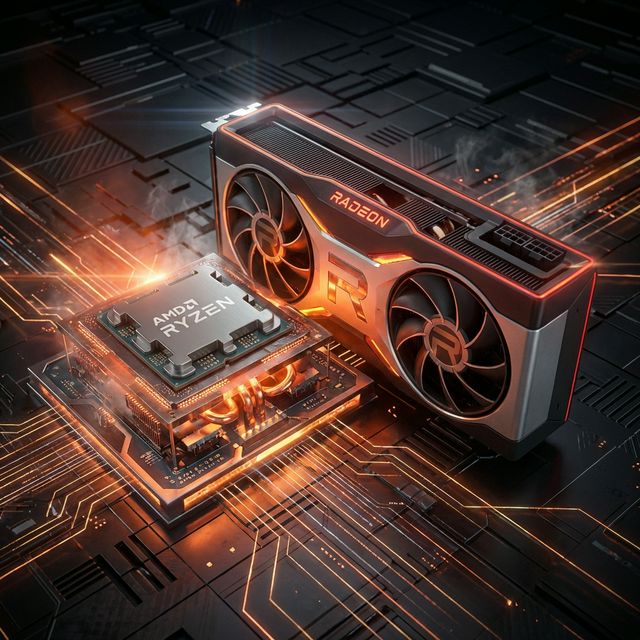

Ryzen 7 7800X3D vs RX 6700 XT Build Analysis
Building a PC in 2026 brings up one critical question: does the Ryzen 7 7800X3D really keep up with the RX 6700 XT? We've analyzed thousands of hardware combinations, and this specific duo offers a fascinating case study in performance balance. In this deep dive, we're not just looking at bottleneck percentages. We're breaking down architecture, gaming scenarios, and future-proofing to give you a definitive answer on whether this build deserves your hard-earned money.
Processor Deep Dive
At the heart of this configuration lies the Ryzen 7 7800X3D, a chip that represents Ryzen 7000 architecture. With 8 cores and 16 threads, this processor isn't just a number cruncher; it's the traffic controller for your entire system.
For gamers, the base clock of 4.2 GHz boosting up to 5 GHz is significant. Modern game engines, especially in open-world titles like Cyberpunk 2077 or Starfield, rely heavily on single-core speed for physics calculations and NPC AI. The Ryzen 7 7800X3D delivers a single-thread performance score of 930, which is a critical metric for minimizing stutter and ensuring 1% low FPS stays smooth.
However, it's not all about gaming. The multi-thread score of 890 indicates that this CPU is a beast for productivity. If you're planning to stream or render video while gaming, those extra threads provide the headroom needed to avoid frame drops.
Graphics Powerhouse
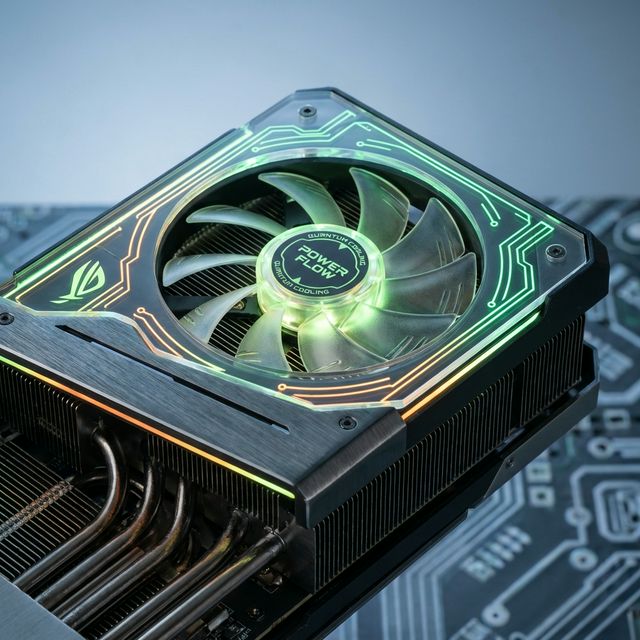
Handling the visual heavy lifting is the RX 6700 XT. Built on the RDNA 2 architecture, this card brings 12GB GDDR6 of VRAM to the table. In an era where textures are becoming increasingly detailed, VRAM is king. With 384GB/s of bandwidth, the RX 6700 XT ensures that high-resolution assets are loaded instantly, reducing pop-in and stuttering.
Ray tracing performance is another key area. With a score of 460, this GPU offers a capable entry point into ray-traced gaming, though you might lean on upscaling technologies.
Speaking of upscaling, support for FSR 2.2 is a game-changer. It allows the card to render at a lower resolution and upscale with AI, granting you free performance. For a card like the RX 6700 XT, this means longevity. Titles releasing three years from now will still be playable thanks to this AI-driven headroom.
System Synergy Verdict
We've detected a 21% graphics card bottleneck.
Actually, this is often the ideal type of bottleneck for gamers. It means your Ryzen 7 7800X3D has plenty of headroom and isn't breaking a sweat, ensuring your system remains responsive even with background apps open. The RX 6700 XT is running at 100% utilization, delivering every frame it possibly can. This is exactly how you want a gaming PC to operate—you are extracting maximum value from your most expensive component, the graphics card.
It's important to remember that "bottleneck" isn't a dirty word. Every computer has a bottleneck somewhere; otherwise, it would have infinite performance. The goal is to manage where that bottleneck lives.
Power & Memory Requirements
When building a system with the Ryzen 7 7800X3D and RX 6700 XT, accurate power delivery is critical.
Memory (RAM): For this tier of performance, 16GB of RAM matches well. For optimal 1% low FPS, we recommend a dual-channel configuration, ideally clocked at 6000MHz or higher for DDR5 platforms.
Real-World Gaming Performance
1080p Competitive
The Ryzen 7 7800X3D shines here, feeding the GPU effortlessly.
1440p Sweet Spot
Expect buttery smooth frame rates in AAA titles.
4K Ultra HD
The RX 6700 XT delivers a stunning 4K experience.
Methodology
Our bottleneck calculation isn't a simple "bigger number is better" guess. We use a proprietary algorithm that models the instruction throughput of the Ryzen 7 7800X3D against the render throughput of the RX 6700 XT.
- Resolution Scaling: We adjusted the calculation based on your selected resolution. At 4K, we reduced the CPU penalty because the GPU becomes the primary limit.
- Architecture Damping: We factored in the specific IPC (Instructions Per Clock) improvements of the Ryzen 7000 architecture.
- Game Engine Simulation: Our model simulates a "general" open-world game engine workload, which is the most demanding scenario for CPU-GPU communication.
This results in a "Bottleneck Percentage" that reflects real-world frame pacing issues rather than just average fps numbers.
Future Proofing
Investing in PC hardware is always a battle against obsolescence. The RDNA 2 architecture of the GPU suggests it has modern feature sets like mesh shaders and AV1 encoding, which are becoming standard.
Meanwhile, the Ryzen 7 7800X3D on the AM5 platform offers a specific upgrade path. Since this is a modern platform, you likely have room to slot in a more powerful CPU down the line without changing your motherboard.
Frequently Asked Questions
01. Is the Ryzen 7 7800X3D good for the RX 6700 XT?
They are compatible, but not perfectly balanced. You might experience some GPU limiting in certain scenarios.
02. Will the Ryzen 7 7800X3D bottleneck the RX 6700 XT?
No, the Ryzen 7 7800X3D is powerful enough to keep up with the RX 6700 XT without significant issues.
03. What power supply do I need?
The combined TDP is 350W. We recommend a minimum of a 500W PSU.
04. Is this build good for 1440p gaming?
Absolutely. The RX 6700 XT is well-suited for 1440p gaming.
05. Can I run 4K games with the RX 6700 XT?
Yes, this card supports 4K gaming, though you might need to use DLSS/upscaling for the smoothest framerates.
06. Does the RX 6700 XT support Ray Tracing?
Yes, it has dedicated hardware for Ray Tracing (Score: 460).
07. Do I need DDR5 RAM for the Ryzen 7 7800X3D?
It is recommended. The Ryzen 7 7800X3D supports DDR5, which provides a bandwidth boost.
08. Is the Ryzen 7 7800X3D good for streaming?
Yes, with 8 cores, the Ryzen 7 7800X3D can handle gaming and streaming simultaneously.
09. What is the bottleneck percentage?
Our calculation shows a 21% bottleneck.
010. How many FPS will I get?
In standard 1080p gaming, you can expect an average of roughly 81 FPS.
Final Thoughts: Is it worth it?
Pairing the Ryzen 7 7800X3D with the RX 6700 XT is a decision that defines your PC's character.
While functional, there are better optimizations to be made. Consider swapping one component to get better value.
In the fast-moving world of PC hardware, finding a duo that works this well together is satisfying. Whether you're chasing high frames in competitive shooters or getting lost in ray-traced worlds, this system is built to deliver.